By Christine Serlin Aug 19, 2026

From a veteran operator who helped build one of the nation’s largest third-party management companies to a developer expanding a regional platform nationally and a young entrepreneur reimagining leasing through artificial intelligence (AI), Multifamily Executive’s 2026 executive honorees represent the breadth of leadership driving the apartment industry forward.
…
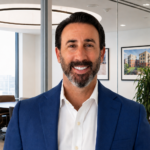
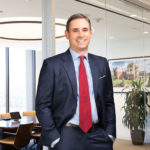
The MFE 2026 Executive of the Year is Sean Burton, CEO of Cityview, a vertically integrated real estate investment manager. Burton co-founded Cityview in 2003 and has led it to become one of the most active multifamily developers in Los Angeles. In 2025, he saw a strategic opportunity to expand Cityview’s investment and capital raising beyond its Western and Southwestern roots, opening an office in New York City to expand the platform nationally.
Burton also is passionate about giving back to his community. After Los Angeles’ devastating fires last year, he partnered with Montage Development’s Stephen Ross to launch Genesis Builders, a turnkey rebuilding solution to help homeowners navigate the challenges associated with insurance, design, permitting, contracting, and construction. In 2027, he will chair the Los Angeles Area Chamber of Commerce, which represents over 235,000 businesses in the county.
What’s one trend reshaping multifamily that industry leaders can’t afford to ignore?
Burton: Vertical integration. For many years, the allocator model versus the direct operator model was preferred by many investors. Over time, investors have realized that a firm that is closer to the real estate has better information to make decisions and is more able to execute on these decisions quickly and efficiently. This can lead to better, faster results.
This is the reason that Cityview changed its structure in 2010 during the Great Financial Crisis. We made the decision to vertically integrate and invest substantially in growing and broadening the platform. We started with development, then construction management, then general contracting (for our acquisitions), and finally added property management in 2018. The alignment and shared goals across all functions ensure everyone is communicating and rowing in the same direction, which helps us to lower costs, lease more efficiently, and leads to better execution and results.
Looking ahead, where do you see the greatest opportunity for the industry?
Burton: The explosion of available data and rapid advancement and sophistication of AI tools have leveled the playing field for smaller and midsized managers versus the mega allocators. It allows smaller firms to lean into their real strength of being a sharpshooter who knows the market like the back of their hand and really understands what product is right for their customers—the residents. This high-touch model can lead to higher retention and greater rent growth, which drives stronger operating results for investors.
But AI and data are really just one part of the equation. I spent eight years as a Naval intelligence officer, and I learned that data and technology are critical but can only take you so far. You need human intelligence too—a human in the loop.
That’s why our acquisitions team members spend most of their time in our markets meeting with brokers, operators, and elected officials to get a real, boots-on-the-ground read on what’s happening and where the opportunities are. We combine that intelligence with our data-driven forecasts to help guide every investment decision.
What’s the most important leadership lesson you’ve learned in your career so far?
Burton: Early in my career, I learned about the concept of “kaizen”—the Japanese philosophy of continuous improvement used by successful firms like Toyota. Small, incremental changes compound to bring about big meaningful change over time. By creating a flywheel of innovation, analysis, lessons learned, and change, a firm can constantly improve. You have to analyze your mistakes so you can get better, but also your successes so you can double down on what works. And all of this can only exist in an environment of trust where team members realize they won’t be punished for mistakes and that the greatest sin is to hide your mistakes rather than own up to them so everyone can learn.
When you invite people at every level to improve their own work, they take initiative and ownership. That ownership builds pride, and pride builds motivation. And this builds better results for your investors and your firm.
Read more: MFE’s 2026 Executive Honorees Share Their Vision for Multifamily’s Future