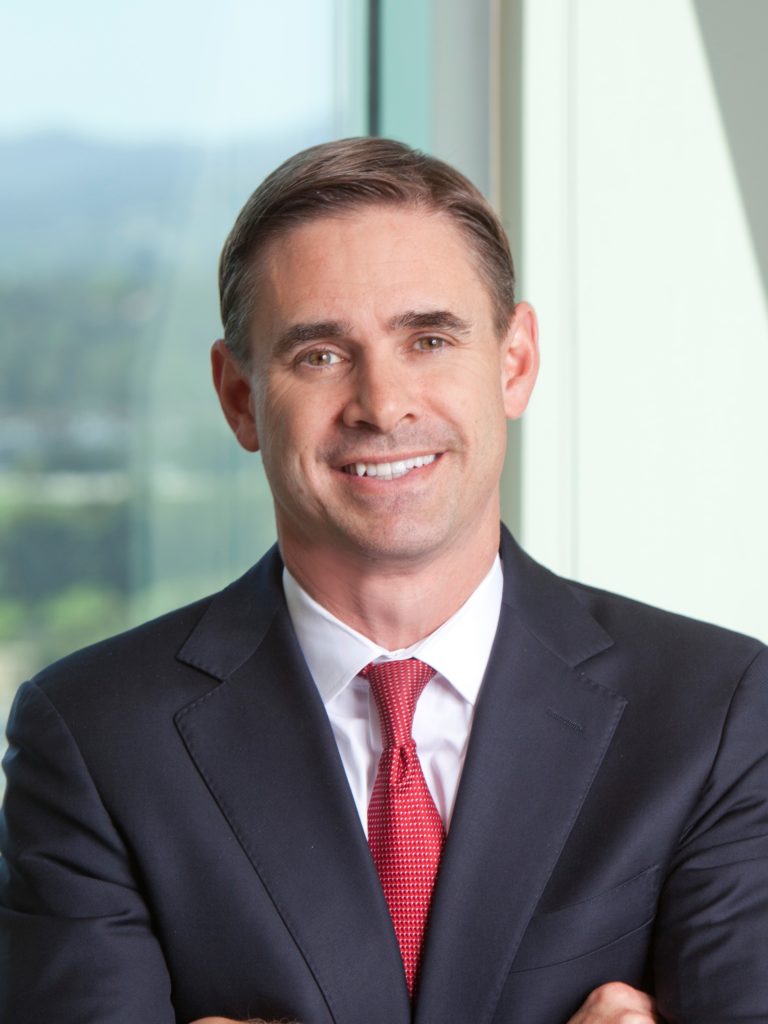
Cityview CEO Sean Burton: Production of ‘Missing-Middle’ Housing Undermined by Measure ULA

Cityview CEO Sean Burton: Production of ‘Missing-Middle’ Housing Undermined by Measure ULA

Cityview was recently named by LA Business Journal as the decade’s most active multifamily developer in Los AngelesIn this TPR interview of Cityview CEO Sean Burton, shares how his development firm is boosting housing stock across the western United States despite the challenges—particularly after the passage of Measure ULA—in the City of Los Angeles.

“…The rule of thumb is that you generally want to replace about 3 percent of the existing housing stock every year to make up for obsolescence, new jobs, and demographic growth. In Los Angeles, we’re projected to deliver, over the next five years, between onehalf and 1 percent…I think ULA is a real challenge … It has significantly raised the costs of building any new housing in Los Angeles. That was an unintended consequence, but a pretty devastating one.”—Sean Burton
Sean, Let’s begin by reminding The Planning Report readers the breadth and focus of Cityview’s work in the Western United States.

Sean Burton: Cityview is a developer, operator, and investor in multifamily housing for the Western half of the country. We buy, rehab, and build. Building is probably how people know us the best, but we have done about 50% of each over our history.

We develop throughout California, both southern and northern. In the Pacific Northwest, we are active in Portland and Seattle, and then over to Denver and Boulder and Salt Lake City, and down through Arizona and Texas.

That’s what we’ve done for 20 years. We continue to be focused like a laser on those markets and that strategy because we think being a sharpshooter with deep market experience gives us a competitive advantage.

Focusing on housing markets that you’ve just enumerated, how is each different? Where are the most promising housing markets and where are the most challenging markets?

These markets generally all share something in common – a pretty significant supply and demand imbalance. If you look at demographic growth, job growth, and income growth, the markets I just named are growing significantly faster than the rest of the US.

Even more importantly, other than maybe for Dallas, these markets are not building enough housing. You have a real, supply-demand imbalance, which is, unfortunately, driving significantly higher housing prices and higher rents.

The rule of thumb is you generally want to replace about 3 percent of the existing housing stock every year to make up for obsolescence, new jobs, and demographic growth. In Los Angeles, we’re projected to deliver, over the next five years, between one-half and 1 percent.

We like to invest in markets where you have the supply and demand imbalance because it is a good investment for our investor partners and we feel we’re part of the housing crisis solution. We’re actually creating more housing options for people who live there.

Cityview was recently anointed by the LA Business Journal as the decade’s most active multifamily developer in Los Angeles. Elaborate on that accomplishment.

We’ve been at this a long time. We don’t dip our toe in a bunch of other asset classes. We were founded on the premise of adding more housing. We started here in LA; everything has grown out from here.

We’re currently not only very active owners– with 35+ existing buildings in Los Angeles–but we’re also continuing to develop. We’re delivering about 1500 units over the next few months of new housing and have another 1800 or so in process that we’re developing in the future. Not all of those are in LA, but we have a strong presence in LA County.

That’s how, for four or five years while the Business Journal has run this “largest developers in Los Angeles” list, we’ve been at the top of that list for multifamily.

Address more fully the multifamily market niche that Cityview prioritizes. What’s the firm’s price point and what attracts the firm to multi-family and this price point?

We’ve never been focused on fully government-subsidized affordable housing. We’re also not focused on high rise or ultra-luxury. We’ve always looked for that missing middle or attainable housing. Some would call it workforce housing, but we’re targeting units that are affordable to those who make 100 to 200 percent of the area median income, which is a big deal in a place like Los Angeles because AMI is quite low compared to other jurisdictions. For a household of two people 200 percent of AMI is around $130,000 a year.

We do it all with private capital, so we don’t need any government subsidy. We don’t take any of the allocation that’s going to go to true affordable housing or homeless housing. Those are important dollars that need to be spent on those things.

As a former LA City Planning Commissioner, the focus in California of late has been on providing affordable housing and housing for the homeless. That’s not necessarily the primary focus of your firm’s work, but share what Citiview can contribute to this public goal?

I think this is a common misconception when we talk to elected officials and policymakers that we try to make sure they understand. If you look at the recent regional housing (RHNA) numbers, we need 57,000 units per year in LA City for the next eight years. Anywhere from 50 to 75 percent of those are expected to be market rate, not government subsidized. Therefore, anywhere from 30,000 to 45,000 market rate units need to be built a year. If you look back in 2019 when money seemed to be growing on trees and interest rates were zero, we were building 15,000 to 20,000 units total a year, about a third what is needed.

Sometimes in the concern that elected officials have for creating more affordable housing, they want to crowd out market rate housing, which is still going to be the bulk of what we need. If you don’t have market-rate housing, you’re going to create more issues for folks on the lower end of the spectrum because there’s no place for people to move.  We have to tackle the problem at multiple levels.  No one disputes the need for affordable housing, but that doesn’t eliminate the need for market rate, especially workforce market rate.   

I will also say, even though we build market-rate, virtually every single product we build has anywhere from 10 to 20% affordable units. Again, that’s without any subsidy. If you look at the affordable housing that we’ve actually contributed, it’s a lot more than most affordable housing developments.

What, in your opinion, contributes to our cities inadequately building enough housing, both market rate and affordable in this region? Is it the lengthy permitting process?

The lengthy permitting process is definitely a piece of it. But it’s a whole combination of things. It’s outdated zoning and land use policy. It is a very strong NIMBY sentiment. For any project the needs to be built in the city, it’s very hard to get the necessary support. Land is also very expensive, and costs have gone up. Construction costs are up almost 40 percent since the beginning of the pandemic. On top of that, it takes a long time to get permitting, which adds to the cost. LA is much slower than other jurisdictions. When you add all that together, it’s a recipe for less housing and higher housing costs.

I do think the new mayor is focused on this. She understands this is a real problem. She started with her first Executive Directive 1 to speed up permitting for truly affordable housing, but again, that’s a fraction of what’s actually built in the city. One of the suggestions we’ve made to her team and to planning is to expand that to mixed-income housing. I think that would really help expedite things.

Sean, you mentioned land cost as a contributing factor to the escalating price of housing. One could argue, as Henry George did long ago,  that when you up-zone a property, you increase the the value of the seller’s land because of what can be prospectively built on the land. Is that not a serious problem for affordability?

At the end of the day, the market sets the price based on what’s available. I think it could be a problem, but again, construction costs are 40 percent higher. A lot of that’s going to come out of the land price. That’s just how the economics work.  At the end of the day, one of the biggest things we can do for housing affordability is build more housing.   

There’s a lot of talk of businesses that have left Los Angeles. You will often hear the business community broadly talk about regulations and taxes and those kinds of things, but if you actually talk to the firms who left, they will tell you the number one issue is the people that work there can’t afford housing. This is not just a housing issue. I think it’s a much broader economic issue for the city and the region.

You’re in multiple regions where the same issues are present. So what’s the common denominator?

I think the common denominator is that municipalities with significant development hurdles, timing, cost, support, etc., will ultimately produce less housing and potentially exacerbate housing affordability further.  In most cases the is the opposite of what these regions want to be doing and Los Angeles is a perfect example, it’s very challenging to get things entitled in Los Angeles.

Is LA more or less challenging than other jurisdictions?

It’s the same for San Francisco, but it’s more challenging in LA than any other community that we work in (we are not actively developing in San Francisco for a whole host of reasons). We’re in supply-constrained markets where none of them are easy, but a lot of them are easier than Los Angeles.

Measure ULA has passed and it promised voters billions in funding to produce affordable housing. It’s still in its infancy and challenged in court. How would you assess the contribution and implementation of that funding?

I think ULA is a real challenge to the City of Los Angeles. It was something that was sold as a mansion tax. As we all know, it’s much broader than that. It has significantly raised the costs of building any new housing in Los Angeles. That was an unintended consequence, but a pretty devastating one.

Almost every developer I know is not underwriting new deals in Los Angeles right now because the cost is so impactful of ULA. It’s really a double whammy in the sense you’re going to have a lot less housing built, which is going to drive prices up significantly.

In addition, because of that and the tax, people are choosing not to sell. So, you’re not going to generate those billions of dollars of revenue that’s desperately needed for affordable housing.

Obviously, we need to find as much money as we can to build affordable housing, but we need to do it in a way that doesn’t cripple the building of market rate housing, which is only going to exacerbate the problem.

What was missing in the campaign to pass Measure ULA that should have been more fully addressed?

 It all happened very quickly. I think there was not a lot of information out there. Maybe shame on the business committee and the real estate community for not raising the impact that it would potentially have. It’s bad for the city overall. We’re going to have to find a way to either repeal it or amend it in order to move forward.

As someone who has capital from investors all over the world and major institutions, there’s a lot of concern about Los Angeles for a lot of reasons. ULA, in many ways, is the straw that broke the camel’s back. There’s almost been a red line on both the equity and the debt side in Los Angeles because of it.

I think that we need to work, starting with elected officials and policymakers, to educate people on the impact and the unintended consequences of ULA by sharing facts.

I don’t expect the LA Times to run articles on ULA to lay out the other side of this. They haven’t to date. I think it’s going to have to happen through publications like The Planning Report that thoughtful people in Los Angeles read and through direct communication with elected officials and policymakers, backed by data. 

Pivoting to the City of LA’s community plans, we interviewed you in 2009 upon your appointment by Mayor Villaraigosa to the City Planning Commission. You commented on the ongoing task of updating the city’s community plans. Last week, the City Council approved DTLA 2040. Elaborate on its significance of its adoption.

Anything that creates more certainty and predictability for housing is going to lower the cost and increase the speed of the creation of housing. I think that’s a positive. I’m just sorry it took so long to get there.

It was disappointing to see some last-minute changes made to the DTLA plan that the city’s own planning department said will potentially cut out 60 percent of the new housing. I would hope the City Council understands the impact of those decisions and what that’s going to mean for housing costs.

I’m glad we’re at least making some progress, and I hope that the Building and Safety and DWP and the Bureau of Engineering and the other departments that are critical to the actual production of new housing are onboard and ready to help move these projects forward.

As a former planning commissioner and successful infill developer, how might “city planning” improve the building of denser, managed, livable growth?

Obviously, I have a lot of respect for our planning department and I think that they’re the experts on this. There’s education for policymakers and elected officials on the fundamentals that needs to happen.

Some of the transportation or development overlays and things like that that the last Planning Commission did were very helpful. The little bit of housing being built is because of those kinds of things. So, planning can play a critical role.

In implementation, everything’s got to go through hearing examiners and the City Planning Commission and others. Expediting those projects is absolutely critical, and I know planning wants to do it. They’re very focused on that issue, and I think they should continue to take a leadership role to drive an agenda forward to create more housing in the city.

A recent TPR interview of Sola Impact’s Martin Muoto, shares his affordable housing finance model which relies on only private money to deliver housing at $250,000 a door in South LA. What Cityview’s take on Martin’s approach?

I have a lot of respect for Martin and his firm. He’s playing a critical role in a segment of new housing in neighborhoods that haven’t seen enough new housing being built. I understand his position about not taking traditional affordable housing financing.

I wish him the best of luck as he works to scale.

Let’s pivot to your civic work on the LA Board of Airport Commissioners and the massive capital modernization projects which you had overseen. With the distance now of no longer being on that commission, how do you assess LAX’s progress?

I think it’s going really well. We had set a goal of having a people mover and the rental car facility done and operational before the start of the Olympics when the Olympics were scheduled to be in 2024. To Justin Erbacci’s, as a general manager, and the current board’s credit, they are on track to deliver that, which I think will be a game changer for passengers at LAX.

I can’t wait until it’s all done and I know the 70 million passengers a year also cannot wait till it’s all done. Then, they won’t have to sit in the gridlock on the central horseshoe. I think it’s going to be great for passengers, but also great for broader Los Angeles.

Lastly, turning to your personal investment in civic education and the LA Coalition, could you describe the opportunities, challenges, and the makeup of that coalition? Are you accomplishing LA Coalition’s ambitous mission?

The LA Coalition was formed in 2009 after the Blue Ribbon Commission Mayor Villaraigosa put together to help figure out how Los Angeles could emerge from the great financial crisis. The commission was a group of civic and business leaders that came up with a series of recommendations.

The coalition was created to help implement the recommendations so the commission’s work wasn’t just another report and continue to provide resources, guidance, and expertise on those recommendations.

Just recently, Kevin Demoff from the Rams and I were asked to co-chair that organization as it goes into its next phase. It’s really going to be committed to two things. One is a laser-like focus on how we address the housing challenge that we have in LA. That’s homeless housing, affordable housing, and market-rate housing. The second area is workforce development. How do we address the skills gap that exists here? What kind of policy should the city and the state be pushing forward in order to address that skills gap?

I’m excited because those are two things I’m very passionate about, and I look forward to being part of the conversation and helping to drive some solutions to the challenges we face.

Read more: https://www.planningreport.com/2023/06/15/cityview-ceo-sean-burton-production-missing-middle-housing-undermined-measure-ula

Devang Shah

Principal

Devang Shah, Principal at Genesis Builders, was instrumental in building the firm from the ground up and continues to lead its operations, sales, marketing, and strategic direction. With more than 25 years of real estate experience, Devang brings a unique combination of strategic vision and hands-on expertise in acquisition, development, design, construction, capital raising, and asset management.

Before launching Genesis Builders, Devang served as Managing Director at Cityview, where he sourced and financed the acquisition of more than 2,000 value-add apartments and led the development of over 1,500 residential units in Los Angeles, San Diego, Orange County, Denver, and Portland.

Earlier in his career, he founded Marketcents Inc., an independent project management firm focused on advisory and owner representation. He also held a leadership role at KB Urban (a division of KB Home), where he oversaw the planning, design, and marketing of high-profile residential communities across Southern California, including mixed-use and luxury projects that helped shape the region’s urban landscape. Earlier, at RCLCo, as Vice-President he provided in-depth market research and feasibility analysis for large-scale residential and mixed-use developments throughout the United States, advising leading developers and investors on strategic opportunities.

Driven by a passion for thoughtful design and meaningful community impact, Devang has played a key role in delivering more than 75 residential communities throughout the Western U.S.

AmyLee Smith

Marketing Manager

AmyLee Smith serves as the Marketing Manager for Genesis Builders, where she drives the strategic planning and execution of brand and sales campaigns, leverages detailed data reporting to optimize performance, and leads all social media content and community engagement. She oversees the development of creative assets and supports the coordination of events that strengthen brand presence and deepen customer connection. She is excited to work with Altadena and looks forward to building strong momentum and meaningful community relationships through this partnership.

Before joining Genesis Builders, AmyLee developed a wide ranging background across operations, marketing and event coordination for well known global brands such as Starbucks, Lululemon and SoulCycle, and Alfred Coffee. In these roles she managed and supported local Los Angeles marketing programs, community partnerships and large scale activations that helped deepen brand loyalty and neighborhood engagement.

She also brings significant real estate and property management experience from her time as Marketing Project Manager at Westhome Property Management . In that role she oversaw marketing initiatives for a portfolio of more than 4286 homes, strengthening brand consistency, elevating communications and delivering measurable growth across the company’s communities.

Rebecca Zandovskis

Senior Director of Business Development

Rebecca Zandovskis, Senior Director of Business Development, is a proud Altadena resident, where she lives with her husband of 13 years. Deeply rooted in the neighborhood she calls home, Rebecca leads with a philosophy centered on connection, collaboration, and community impact.

Rebecca brings more than 25 years of combined experience in real estate and human resources, supported by her California Real Estate License, aPHR certification, and a strong foundation in Human Resources Law. Throughout her career, she has distinguished herself as a trusted leader and community advocate, serving as Community Manager for more than 14 new-build and value-add residential communities across the greater Los Angeles area.

Motivated by a commitment to helping neighborhoods flourish, Rebecca joined Genesis Builders to ensure her Altadena community can rebuild quickly and affordably—without sacrificing quality, craftsmanship, or the unique character that makes the area so special.

Christy Pointer

Regional Manager

Christy is a seasoned professional with over 15 years of experience in the apartment residential industry. As a dedicated Regional Property Manager, she has successfully piloted the complexities of the field across multiple states, demonstrating expertise in various facets of property management.

Throughout her career, Christy has been instrumental in overseeing new development projects, supervising property rehabs, optimizing portfolios, and spearheading successful lease-ups. Her strategic leadership and hands-on approach have consistently driven operational excellence and maximized property performance.

Her expertise lies in fostering strong tenant relationships, optimizing property performance, and implementing effective management strategies. Christy is committed to delivering exceptional service and value to property owners and residents alike, making her an asset in the industry.

Anna Keesling

Regional Manager

With over a decade of progressive experience in property management, Anna brings a strategic, people-centered leadership style that drives operational excellence and organizational growth. She has successfully led portfolios spanning luxury high-rise assets and highly sought-after garden-style communities, delivering exceptional results across diverse markets.

Known for developing high-performing teams and fostering a culture of accountability and engagement, Anna combines strategic insight with operational precision to enhance asset value and elevate the resident experience. Her expertise extends across performance optimization, capital planning, and client relations, where she has built trusted partnerships that support long-term success.

Anna is deeply committed to creating communities that embody quality, innovation, and service excellence—ensuring that each property under her leadership achieves peak performance and enduring value.

Justice Bryan

Regional Manager

Justice Bryan is a results-driven Regional Property Manager with extensive experience enhancing multifamily operations across varied markets and asset types.

He has successfully directed lease-ups, stabilized properties, and implemented large-scale capital improvement programs. Justice drives operational excellence, financial optimization, and sustained portfolio growth.

Marge Enrique

Sr. Director of Marketing

As a Multifamily Marketing Director and an executive leader, Marge has driven business growth, lease generation, and high occupancy rates for high-value lease-up projects by building cost-effective and progressive marketing strategies.

Being a property management veteran for 9 years, Marge possesses extensive experience in programming and marketing properties with a collective unit count of over 8000 units spanning 39 properties nationwide. Her bottom-up approach to strategy has optimized property occupancy by augmenting marketing functions and consumer engagement. Skilled at analyzing marketing trends, identifying improvement opportunities, and implementing operational upgrades, she has had success supporting overall occupancy growth.

Similarly, her focus on digital marketing operations to capitalize on enhanced market coverage, cost-effectiveness, and the return-on-investment rates has amplified market awareness by 55% by creating an active brand voice in local communities and on digital platforms.

Christina Bartlett

Sr. Director of Property Management

Christina Bartlett, Director of Operations for Westhome, brings over 11 years of experience in multifamily management and operations. Prior to coming to Westhome, Christina was an Asset Manager with a 3rd party management company, providing executive level support and oversight for clients along with being instrumental in property acquisitions. With Westhome, Christina is responsible for planning and implementing best practices to support on-site teams through employee training and development along with promoting Weshome’s company culture and values.

Emilia Leon

Director of Culture and Development

As Westhome’s Director of Culture & Development, Emilia Leon leads initiatives that inspire a dynamic, people-first workplace. She designs engaging training programs, creates innovative onboarding resources, and fosters a culture of collaboration rooted in Westhome’s core values.

With a passion for empowering teams and enhancing employee experiences, Emilia has helped shape Westhome’s approach to professional development, ensuring every team member feels supported and set up for success. Her work reflects a deep commitment to building cohesive teams and cultivating an environment where both employees and residents thrive.

Maggie Deichmann

Managing Director of East Coast Acquisitions

Based in New York City, Deichmann pursues strategic acquisition opportunities across the Eastern U.S. Deichmann has more than fifteen years of commercial real estate experience in acquisitions, portfolio management and asset management across the capital stack at various risk profiles.

Previously, she served as Managing Director, Head of Opportunistic Equity and Structured Products Asset Management, for Affinius Capital (formerly known as Square Mile Capital), where she was responsible for overseeing a $15 billion portfolio of existing opportunistic investments and structured products. Prior to that, Deichmann worked at Allianz Real Estate of America on its acquisition team, investing over $18 billion across housing, office, and logistics strategies.

Deichmann is a member of the New York University (NYU) Stern Real Estate Advisory Council serving as an Executive-in-Residence and a member of the Urban Land Institute. She holds a Master of Business Administration degree from NYU Stern School of Business and Bachelor of Arts degree in economics from NYU College of Arts and Sciences.

Christoph Donner

Principal and Global Head of Capital Development and Strategy

Based in New York City, Donner pursues new global strategic opportunities, builds and maintains relationships with investors and partners and leads the firm’s fund development and capital strategy.

Previously, Donner was CEO of America PIMCO Prime Real Estate LLC (formerly Allianz Real Estate of America LLC), where he provided strategic leadership over the commercial mortgage loan business and equity investments of Allianz’s global subsidiaries in North America. During his time as CEO, the firm’s real estate investments grew from $7 billion to $22 billion.

Prior to that, he was a Senior Managing Director and Chief Credit Officer at Aareal Capital Corporation, where he managed a portfolio of $5 billion. He has also served as Managing Director at Hypo Real Estate in New York, London and Munich, Head of Project Finance at Vivico Real Estate in Frankfurt, Germany and as a Vice President at Deutsche Bank in Frankfurt.

Donner is a member of the Real Estate Roundtable and the Urban Land Institute’s Global Exchange Council. Previously, he was a board member for the Association of Foreign Investors in Real Estate (AFIRE). He holds a graduate degree in business from the Technische Universität in Berlin.

Quinn Konitshek

Director, Acquisitions
Based in Dallas, Quinn Konitshek manages stabilized and ground-up acquisition opportunities for Cityview across the Southwestern U.S., with a focus on Texas, Arizona and Colorado.
 
Previously, Konitshek worked in acquisitions at Kushner, where he sourced multifamily deals across Texas and the Southwestern U.S. Prior to that, he worked in acquisitions for Barvin, a Texas-based multifamily investment and development firm, and worked on the development team for ROY Asset Holding, a Texas-based international family office. 
 
Konitshek earned his bachelor’s degree in economics from San Diego State University, and is an active member of Urban Land Institute.

Steve Roberts

Vice President, Development and Construction
Steve Roberts is responsible for the development of several of Cityview’s ground-up multi-family assets, including due diligence, design, entitlement, permitting, construction, and market delivery. Prior to joining Cityview, Steve managed several nationally award-winning projects as Vice President of Development for Community Dynamics, a Santa Monica based developer of residential and mixed-use communities. Steve has built his career on creating exceptional communities that deliver high-quality housing to residents, first-rate design for neighbors and municipalities, as well as strong financial returns to investors. Steve holds a BA in Urban Studies and Planning from UCSD and earned an MBA and Master of Real Estate Development from the University of Southern California.

Anh Le

Vice President, Development and Construction

After 8 years in the construction industry managed complex multi-use development projects, Anh Le joined Cityview in 2018. Le manages ground-up developments in Northern and Southern California and leads consultant teams through entitlement, design, permitting, budgeting, contracting, construction management and project turnover. She works closely with designers, neighborhood groups and Cityview’s in-house Asset Management team to deliver best-in-class multifamily projects. Prior to Cityview, Le worked as a project engineer and project manager at Cobalt Construction. Le holds a Bachelor’s of Science in Civil Engineering from the University of California, Irvine.

Zory Grigoryan

Vice President, Development and Construction

Zory Grigoryan is responsible for the full cycle development of several of Cityview’s projects, which includes managing the due diligence, underwriting, entitlement, design engineering, construction processes and turnover to asset management. Prior to joining Cityview, Grigoryan worked for Oakmont Capital as a Project Manager overseeing the development and construction of several multifamily projects. Prior to that, he worked at Cobalt Construction as a Project Manager on the construction of numerous mixed use and multifamily projects. During his career, Grigoryan has been responsible for the development, preconstruction and construction of over 1,500 units.

Grigoryan holds a Bachelor’s of Science Degree in Construction Management from the California State University of Northridge, where he was the top ranked graduate of his year. During his time at Cobalt Construction, Grigoryan was also selected as distinguished alumni by the CSUN department faculty and appointed as ambassador for alumni recruitment by CSUN construction management department’s board of governors committee.

Con Howe

Managing Director of Planning and Entitlement

Con Howe leads Cityview’s partnerships to finance, assemble and entitle land for development in the greater Los Angeles area. With over 40 years of experience in planning, entitlements and development, he assists all Cityview funds with acquisitions and development strategies. Prior to coming to Cityview, he was the Director of Planning for the City of Los Angeles responsible for the Adaptive Reuse Ordinance and zoning to encourage infill housing. Previously he was the Executive Director of the New York City Planning Department. He earned his bachelor’s degree from Yale and his master’s degree from Massachusetts Institute of Technology (MIT).

Shane Robinson

President

Shane Robinson sets Westhome’s strategic direction and oversees the firm’s operational and financial performance, ensuring consistent, best-in-class execution in support of Cityview’s investment strategy. With more than 24 years of experience in property and asset management, Shane is focused on positioning Westhome as a best-in-market property management platform by sharpening execution, refining operations, investing in the firm’s people and systems and maximizing asset-level performance.

Previously, Shane served as Vice President of Asset Management at Cityview, where he managed all aspects of the firm’s stabilized, value add and new development assets. Prior to that, he was Vice President of Property Management at Westhome, where he helped build the operational infrastructure that facilitated market expansion. During his tenure at Sunrise Management, Shane established and scaled operations in new markets, helping create a strong foundation for the company’s continued growth and long-term success.

Adam Perry

Senior Vice President, Development and Construction

Adam Perry oversees all aspects of the commercial real estate development process from acquisition due diligence and entitlement processing through design budgeting, contracting, construction management, closeout and turnover. Prior to joining Cityview, Adam worked at CIM group as an Associate Vice President of Development overseeing ground up retail, office and mixed-use developments. ​

Adam holds a BA Degree in Political Science and History from UCLA and an MBA from the UCLA Anderson School of Management.

Matthew Falley

General Counsel & Chief Compliance Officer
Matt Falley oversees and directs the company’s legal affairs and is the firm’s Chief Compliance Officer. Matt was previously a partner at Greenberg Glusker Fields Claman & Machtinger LLP, where he represented numerous clients in the real estate industry, including Cityview. Matt holds a B.A. from the University of California, Santa Barbara and a JD from the University of California, Berkeley School of Law (Boalt Hall), where he was a member of “California Law Review” and Order of the Coif.​

Tony Cardoza

Managing Director of West Coast Acquisitions and Development
Tony Cardoza is responsible for Cityview’s acquisition activities throughout the West Coast. He has 21 years of experience in real estate investment and management. Previously, Tony ran the investment group for Real Estate Capital Partners in the Western U.S., which developed and acquired over 5,000 multifamily units. Prior to that, he worked for Prometheus Real Estate Group in a land and multifamily acquisitions role on the West Coast. Tony holds a B.A. in Economics from Middlebury College and an MBA from the Haas School of Business at UC Berkeley.​

Jennifer Halvas

Managing Director, Investor Relations

Jennifer Halvas is a member of the firm’s investor relations team, where she is responsible for maintaining relationships with the investor community and helping to develop investment strategies and initiatives. Over the years, she has been instrumental in securing capital needs for several Cityview funds across a broad base of institutional investors, foundations and endowments, family offices and high-net-worth investors. A 14-year veteran of the firm, Jennifer is also a partner at Cityview and a member of its investment committee.

She was previously at O’Melveny & Myers LLP, where she represented a variety of clients in real estate, project development and finance transactions. Jennifer holds a B.A. with honors from the University of Southern California and a JD from Vanderbilt Law School.

Damian Gancman

Chief Operating Officer and Chief Financial Officer

As Chief Operating Officer and Chief Financial Officer, Damian Gancman oversees Cityview’s asset management, property management and accounting strategy. A 20-year veteran of the firm, Damian is also a partner at Cityview and a member of its investment committee.

He has helped create a multitude of strategic initiatives to support Cityview’s rapid growth, including the launch of Cityview’s property management division, the creation of its opportunity zone fund platform and the build out of its finance and capital markets teams.

In addition to his role at Cityview, Damian serves on the University of Southern California (USC) Lusk Center for Real Estate Executive Committee and is a guest lecturer for the USC Master of Real Estate Development program.

Sean Burton

Chief Executive Officer and Chief Investment Officer

Sean Burton co-founded Cityview in 2003. Prior to joining Cityview, Sean was vice president of corporate business development and strategy at Warner Bros. Before that, he was an attorney in the real estate and corporate groups at O’Melveny & Myers, LLP and also served in the White House during the Clinton Administration. In 2022, Burton was appointed by the President and confirmed by the U.S. Senate as the federal nominee on the Metropolitan Washington Airports Authority Board of Directors, which oversees Washington Dulles and Reagan National airports.

From 2013 to 2021, Sean oversaw the $20B modernization of LAX as President of the Los Angeles Board of Airport Commissioners. He also served as an intelligence officer in the United States Navy Reserve, as the co-chair of the Los Angeles Coalition, a coalition of business leaders for the economy and jobs in LA, and will chair the Los Angeles Chamber of Commerce in 2027. Sean holds a B.A. from the University of California, Irvine and a JD from New York University School of Law.